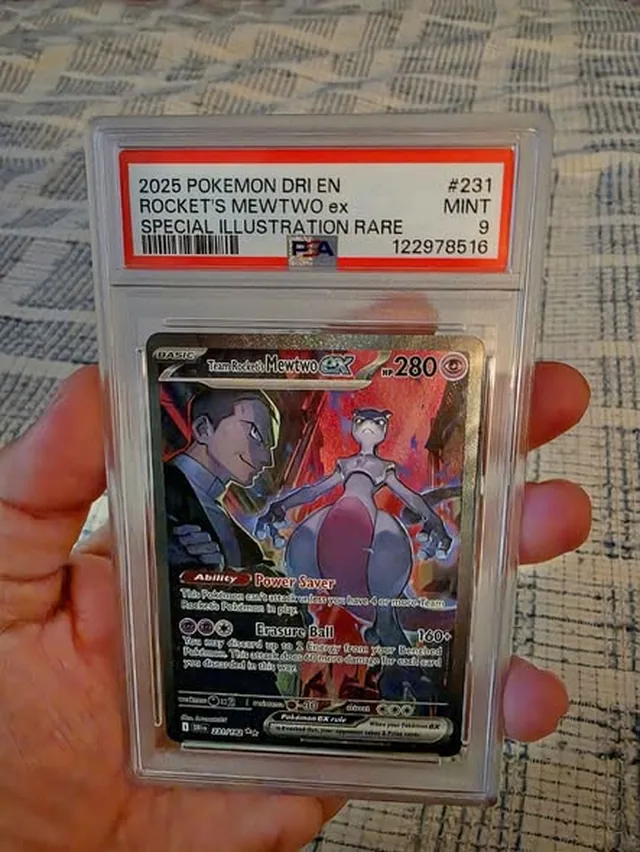
Pokemon card grading cost is more than the fee shown on a grading service submission page. The full amount can include the service tier, shipping both ways, insurance, membership, handling, taxes, and any declared-value adjustment. Fees and turnaround estimates change, so check the grading company’s current terms before sending cards.
What goes into Pokemon card grading cost?
Most grading services organize submissions by service level, turnaround expectation, or declared value. The available options and fee rules vary by company and can change over time. Add the card’s purchase price to grading, inbound and return shipping, insurance, supplies, and any membership expense that applies to your submission.
- Current grading fee for the correct service tier.
- Shipping to the grading company and return shipping.
- Insurance or declared-value coverage, where applicable.
- Membership or submission-group fees, if you choose them.
- Protective sleeves, holders, taxes, and the value of time spent waiting.
Compare likely outcomes before you submit
Compare recent sold prices for the exact card in raw condition and in relevant graded conditions. Use multiple sales when available, and match the grading company and grade rather than treating every slab as equivalent. Estimate the total cost under more than one possible grade. A card can receive a lower grade than expected, and grading never guarantees a profit or a higher resale price.
Check condition without promising a grade
Before submitting, inspect centering, corners, edges, surface, print lines, dents, and scratches under even light. Photos can help you spot obvious issues but cannot guarantee how a grader will assess the card. Avoid cleaning, pressing, or altering a card to improve its appearance; those actions can damage it or affect eligibility under a grading company’s rules.
When grading may make sense
Grading may suit cards you want authenticated and encapsulated, cards with personal or display importance, or cards where the price difference between raw and graded copies comfortably exceeds all costs. It may not make sense for low-value cards, uncertain condition, or a submission motivated only by the hope of receiving a top grade. Decide whether the slab itself is valuable to you even if the market does not reward the fee.
Prepare a Pokemon card grading submission
Follow the selected grading company’s current packaging and submission instructions exactly. Confirm the service tier, declared value rules, and card details; use the specified protective materials; and photograph the card and package before shipment. Keep a copy of the submission form, tracking information, and insurance records.
Pokemon card grading checklist
- Confirm the card identity and current submission requirements.
- Calculate the complete grading cost, not just the service fee.
- Compare raw and graded sold prices for the exact card.
- Consider a conservative grade outcome and possible price changes.
- Submit only if the cost and result still fit your collecting goal.
For more context, read our guide to checking Pokemon card value and the checks for spotting fake Pokemon cards before choosing a grading route.