Learning how to spot fake Pokemon cards is one of the most useful skills for new and experienced collectors. No single visual trick proves authenticity in every case, especially from a low-quality listing photo. Use several checks together, request better evidence for expensive cards, and make sure the seller explains condition and returns before you pay.
Start with the listing and seller evidence
A vague title, copied description, stock-only photography, pressure to pay quickly, or a price far below comparable copies should lower your confidence. These signs do not prove a card is fake, but they justify asking for timestamped front-and-back photos and clearer condition details. A credible seller should be able to explain what is included, how the item is protected in transit, and what happens if the item is not as described.
- Compare the listing name, set information, rarity, and card number for consistency.
- Ask for photos of the exact card rather than a generic product image.
- Check whether the return and refund policy covers authenticity concerns.
- Be cautious of urgency, off-platform payment pressure, and unusually cheap high-demand cards.
How to spot fake Pokemon cards: physical checks
Inspect print sharpness, font spacing, symbols, borders, color balance, and alignment. Compare the card with a verified reference from the same set and language. Texture and foil behavior can also reveal inconsistencies, but lighting and camera settings can mislead you. The familiar “light test” is not a complete authentication method and can damage or misrepresent some cards, so do not rely on it alone.
- Check that text edges and symbols look crisp rather than muddy or overly dark.
- Compare the back design, blue tones, border alignment, and central artwork.
- Look for incorrect set symbols, card numbers, energy symbols, or attack wording.
- Check card thickness and stock only against a verified reference, not memory.
- Inspect holofoil pattern, surface texture, and gloss under consistent lighting.
Extra checks for graded Pokemon cards
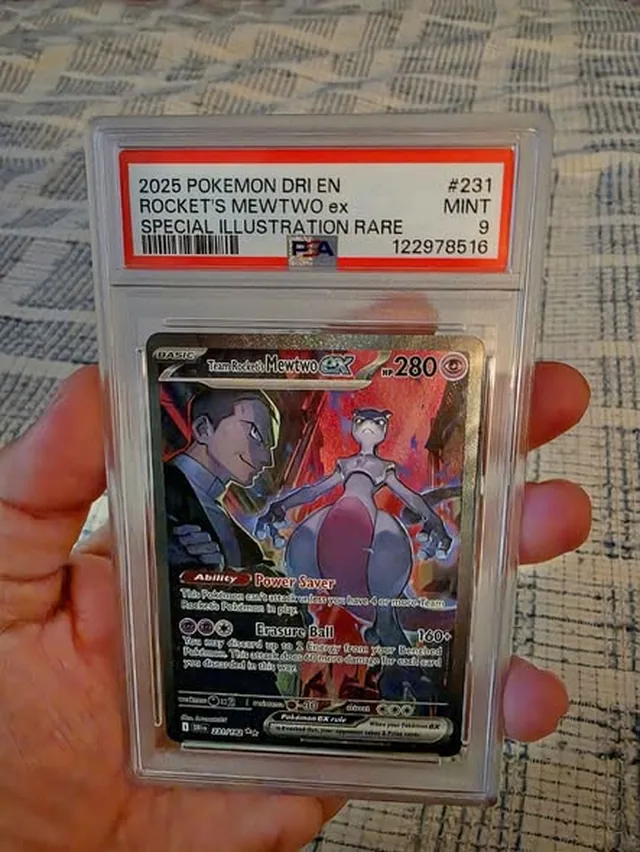
For a graded card, inspect the slab, label printing, certification number, case seams, and seller photos. A certification lookup can confirm that a number exists, but it does not by itself prove that the card inside the slab matches the label. Compare the card image, set, grade, and identifying details when the grading company provides them.
What to do when you are uncertain
Do not complete a high-value purchase while important evidence is missing. Save the listing, request additional photos, compare the card with trusted references, and ask a qualified collector or grading service for an opinion. If an item arrives and appears counterfeit or materially different, photograph the packaging and card immediately, keep the order records, and contact the seller through the documented support channel.
Use this checklist together with the store’s product photos, condition details, refund policy, and shipping policy when evaluating a Pokemon TCG purchase.